
Morrow Facility Release Routes
Morrow County Correctional Facility is the county's central detention point. It holds local felony and misdemeanor detainees, sentenced county prisoners, men, and misdemeanor women. The Morrow County Sheriff's Office operates it. A person may leave for the community after bond or recognizance, after a dismissal, when a local sentence ends, or under an order that starts Municipal or Common Pleas supervision. In each case, the jail owns the physical exit record. The court owns the legal order that allowed the person to leave.
Other exits are transfers. A felony sentence can lead to conveyance into the Ohio Department of Rehabilitation and Correction. An out-of-county warrant can send the person to another sheriff. A separate sovereign may take custody as well. Those events end the Morrow County booking but do not end confinement. The release disposition and destination are therefore as important as the exit date. The Morrow County released inmate search and records path brings the local, court, state, and federal checks together when the destination is uncertain.
Confirm Morrow Facility Releases
The official JDS page is a current-custody snapshot. It displays a run date and time, Jail ID, photograph, name, charges, court, current disposition, total bail, SID, booking date, attorney, next court date, arresting agency, and a field labeled Release Date. Some current rows carry a future date. That value can be scheduled or projected, so it cannot prove that discharge processing finished. Absence is also inconclusive because a transfer, spelling change, or data update can remove a row.
Use the following sequence for a named Morrow County Correctional Facility release. Each step tests a different source rather than asking one database to answer every custody question.
- Check the current roster and record its run time, exact name, Jail ID, court, charge, booking date, and current disposition.
- Search Morrow County Municipal Court for misdemeanor or traffic matters, or Common Pleas CourtView for felony and general-jurisdiction matters. Read the journalized entry.
- Call the jail for same-day status and ask whether the person physically left, when that occurred, and whether the exit was a community release or an agency handoff.
- Request the existing booking and actual release entry from Sheriff records when a durable date, time, authority, or destination is needed.
- If the record shows prison conveyance, another county, or federal transfer, continue with that receiving agency instead of treating the Morrow exit as freedom from custody.
Released and still in custody call for different proof. Presence on the live roster supports listed current custody as of its run time. A completed release is best shown by the actual jail exit entry, paired with the court order when the legal basis matters. A future date or missing row is only a lead.
Morrow Facility Release Records
The Sheriff's records office accepts focused requests in person and by email during its posted weekday hours, except county holidays. Supply the full name, approximate booking date, Jail ID or SID if known, arresting agency, charge, and court case number. Ask for existing records that show booking or intake, the actual date and time of physical release, disposition, destination, and the bond, court order, sentence-expiration entry, or transfer record that authorized the exit. A booking photograph may be requested as a distinct record.
Morrow County Sheriff Records
Address: 101 Home Road
Mount Gilead, OH 43338
Records/admin: 419-947-4845
Email: reports@morrowcountysheriff.org
Hours: 8 a.m. to 4 p.m., Monday through Friday, except county holidays
The Sheriff public-records policy cites Ohio's Public Records Act and promises prompt inspection or copies within a reasonable time after review and redaction. It does not set a fixed response deadline. Ask for public portions and the legal basis for any withheld part. The office need not answer a custom question or create a new report if no such record exists. Inspection is generally the no-copy-cost route, while advance copying or delivery costs may apply.
The records policy lists ten cents per page for recorded documents and separate video-production prices. Those video rates do not establish a price for a routine release entry or photograph. A precise request helps the office locate existing material without turning a release inquiry into an open-ended demand for a whole investigative file.
The official records-policy screen shows the request channels, posted hours, copying terms, and response language.
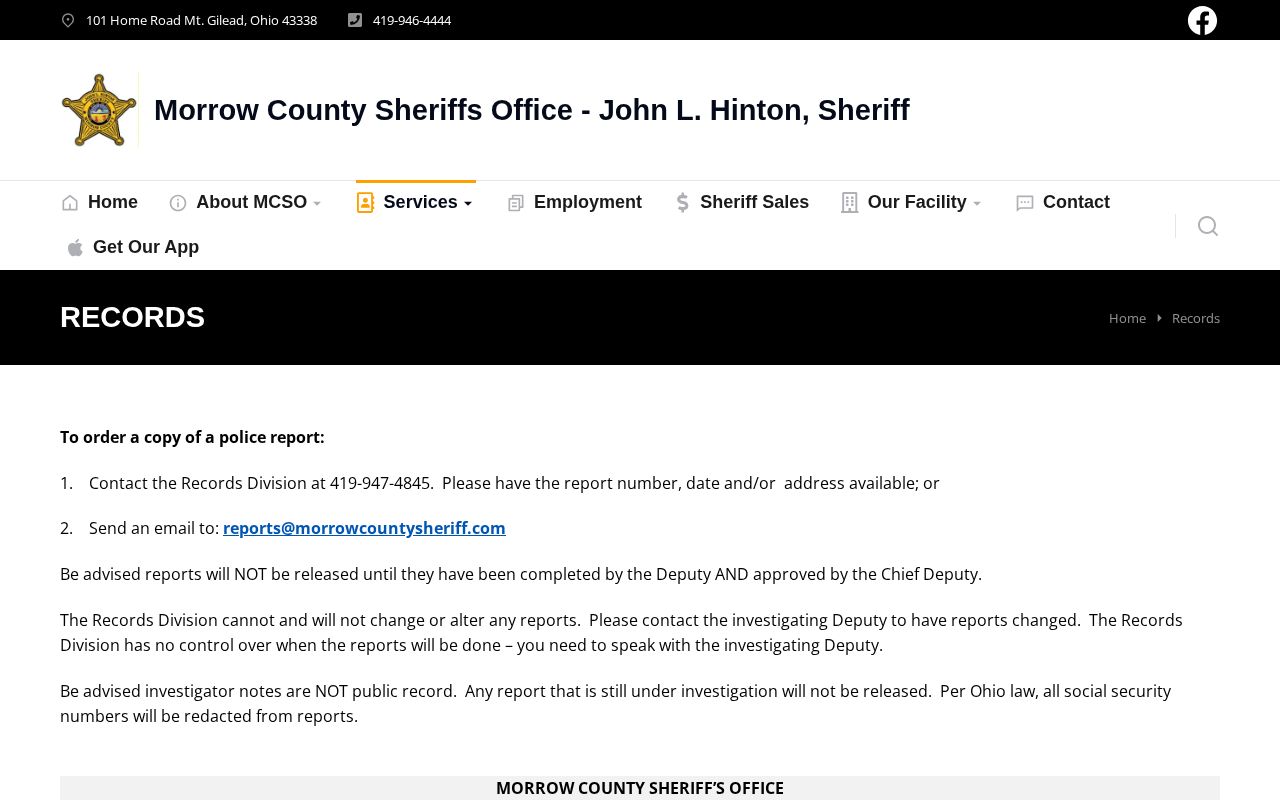
This source is the practical starting point for a retained Morrow County booking or physical-release record after the current roster changes.
Note: Online roster visibility is not a retention schedule; ask the records office to search its retained records by identifiers and date range.
Morrow Release Court Proof
Court records explain why the facility could release or transfer a person. Municipal Court is the usual path for misdemeanor and traffic cases countywide. Common Pleas handles felonies and broader jurisdiction. Relevant entries include bond setting, recognizance release, dismissal, sentence, jail-time credit, completion, probation or community control, conveyance to ODRC, judicial release, and revocation. The roster's own court and disposition labels help select the correct docket.
A court entry may not state the moment jail staff completed discharge. That is why a journalized order and a physical-release entry serve different roles. The order establishes legal authority. The jail record establishes when the person left and whether another agency received them. Keep both timestamps if the order and processing occurred on different days.
| Source | What it establishes | Main limit |
|---|---|---|
| Current JDS roster | Listed custody and booking fields at the displayed run time | Not a historical release archive |
| Municipal or Common Pleas docket | Bond, dismissal, sentence, supervision, or transfer authority | May omit physical exit time |
| Sheriff release entry | Actual departure time, disposition, and destination if recorded | Must be requested when no longer online |
| Receiving agency | Custody after a transfer | Does not replace the Morrow-side handoff record |
Morrow Facility Release Context
The Sheriff's correctional-facility page identifies a 126-bed, full-service operation at the sheriff complex. That description matters. This is not merely a court holding room. It serves local felony and misdemeanor cases and county sentences, which creates several distinct exit paths. The correct destination may be the community, a probation office, ODRC, another county, or another sovereign.
The facility contact line is 419-947-1151. Staff may limit what can be stated by telephone, but that call is useful for a same-day distinction between a discharge and a handoff. For a lasting record, follow the call with a focused records request. When the disposition points to state prison, the correct next source is the statewide ODRC release and discharge route, not continued reliance on the county roster.
Morrow Release ICE History
Morrow County Correctional Facility has a documented immigration-custody history. A federal inspection and litigation described ICE detainees there in 2020. A later Ohio report states that the Morrow ICE operation closed on November 10, 2020. Current wording must respect that later finding. The facility should not be presented as an active ICE detention site without newer official proof.
The source history is still relevant to older release research. A historical detainee's disappearance from Morrow custody may have reflected an ICE transfer or removal process rather than return to the community. In that setting, request the county transfer record, then use the immigration locator and agency contacts for the federal side. The Sheriff can document its own handoff but cannot certify what happened later within another sovereign's system.
The official facility page still contains an ICE contact-visit rule that calls for approval and advance notice. That surviving language does not override the documented closure date. It creates a mismatch between a current webpage and an older operational role. Reading both sources together prevents an outdated policy paragraph from becoming a false claim about present custody.
Note: Historical ICE transfer language should be dated and qualified, since no active Morrow County ICE detention operation was confirmed.
Morrow Facility Release History
The same history explains why older Morrow County Correctional Facility records may name federal actors, immigration destinations, or another sovereign. The 126-bed county operation served more than one custody role in the documented past. A release code created by the sending facility may therefore describe the end of Morrow's responsibility without describing the person's freedom from all custody.
For each old event, separate three questions. First, when did the person physically leave Morrow County Correctional Facility? Second, what court order, sentence event, or agency authority controlled the exit? Third, where did the person go next? The jail record, court docket, and receiving system answer those questions in that order. This method also works for ordinary state-prison conveyances and out-of-county transfers.
Historical Auditor inmate-trust reports add a narrow archival clue for some periods. They list a Jail ID, identity fields, an actual Released date, and a remaining trust balance. They are property reports, not a complete release list. Their value is limited but real: they show that selected actual release dates persisted in county administration after roster removal. A person missing from those reports may still have been released, since the documents covered unclaimed funds rather than all jail exits.